Kickboxing Bag for Home: How to Set Up in South Africa
A kickboxing bag for home changes how often you train. No drive to the gym, no waiting for a free bag, no excuses when the class time doesn't fit. But a bag built for boxing and a bag built for kicks are not always the same thing. Kicks land low, land wide and hit harder than most hands. This guide walks you through the length, weight and mounting you need, and the kickboxing equipment for home that makes the bag worth hanging.
What makes a kickboxing bag different from a boxing bag
Boxers hit the top two-thirds of a bag. Kickboxers use the whole thing. A low kick lands near the base. A body kick lands in the middle. A head kick lands near the top. So length matters more for kickboxing than for boxing.
For kicks, choose a bag of at least 1.5m, and 1.8m if your ceiling allows it. A long bag lets you throw low kicks without the bottom of the bag swinging up into your shin. It also gives you room to work knees and teeps (push kicks) on the same target as your punches.
Width matters too. A slim bag makes it harder to land a round kick with the shin across the middle. A wider bag gives the shin a broader surface to land on.
Choosing the right length and weight
Start with your room, not the bag. Measure your ceiling height and the floor space around where the bag will hang. You need space to step in, kick, and step out.
A practical guide for home setups:
- 1.5m bag: fits most garages and spare rooms with standard ceilings. Good for punches, knees and body kicks.
- 1.8m bag: the full-length option for low kicks and higher kicks on one target. Needs more ceiling height and a longer bracket.
- Weight: heavier bags move less, which suits hard kicks. Lighter bags swing more, which suits movement and footwork drills.
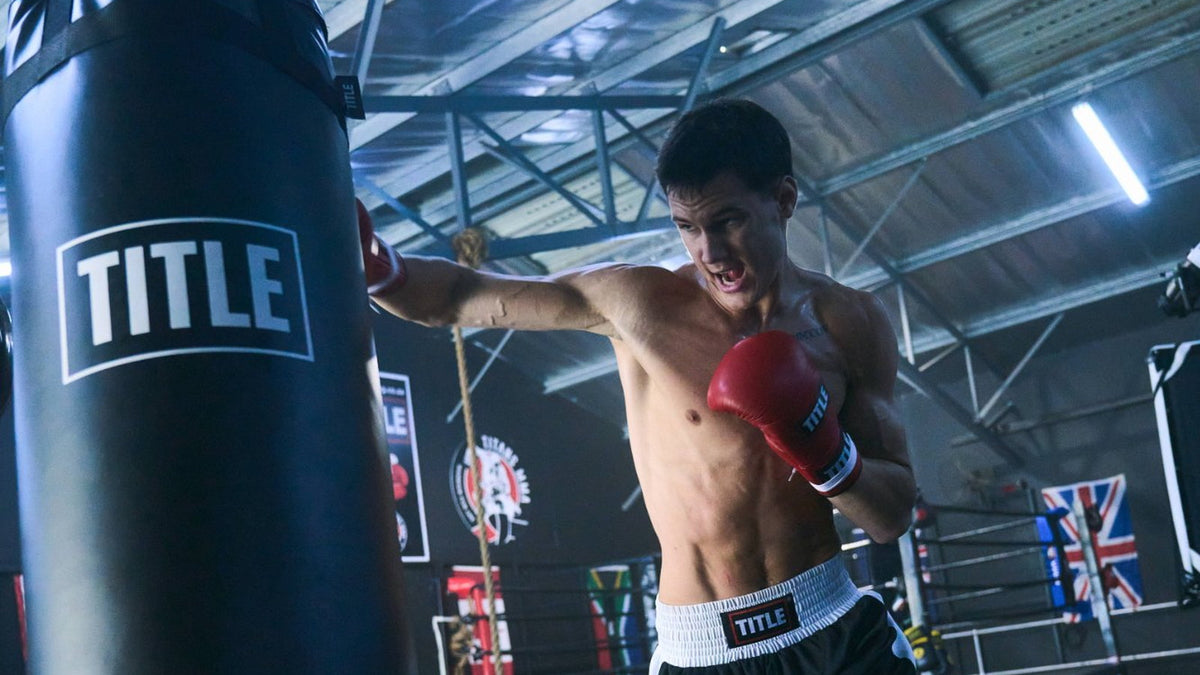
The TITLE Punching Bag: Black & Red Side Panels comes only in full-size lengths, from 0.9m up to 1.8m. TITLE builds it for kickboxing gyms drilling combinations and for serious home use. If you have outgrown a short starter bag, this is where your kickboxing bag for home should start. You will find the full range of lengths in the punching bags collection.
Hanging bag or free-standing kickboxing bag
This is the biggest decision for a home setup.
Hanging bags move like a real opponent. They swing, you time the return, and you stay light on your feet. A hanging bag also takes hard kicks without tipping. The trade-off: you need a solid wall or beam, and you need to drill.
A free-standing kickboxing bag sits on a weighted base. You can move it and you don't need to drill, which suits renters. The trade-off: many free-standing bags rock or slide under hard kicks, and the base limits how low you can kick.
A third option sits in between. A floor-anchored steel stand holds a hanging bag without a wall or ceiling fixing. The TITLE Boxing Stand with Platform and Pro Swivel carries a full punching bag on one arm and a speed bag platform on the other, on a single steel column that bolts to the floor. You get the movement of a hanging bag in a space where the walls can't take it.
Mounting your kickboxing bag for home
A long bag carries a lot of weight, and hard kicks add force on top of that. Use hardware built for the job.
For a wall mount, a long bag needs a bracket with enough reach to keep it clear of the wall. The TITLE Wall Bracket: Large Heavy Bag measures 120cm x 60cm x 55cm in welded steel, sized for bags from 1.2m up to 1.8m. It has a diagonal strut to brace the arm against the wall plate. TITLE makes it in South Africa.
Before you drill:
- Fix into solid brick, concrete or a structural beam. Hollow walls and light roof trusses are not enough.
- Leave at least a metre of clear space all round the bag, more if you kick high.
- Hang the bag so the base sits a little above the floor. You want room for low kicks without the bag scraping the ground.
- Add a swivel so the bag turns without twisting the chain.
If you're unsure what your wall or roof can hold, ask a builder. It costs less than fixing a ceiling.
Kickboxing equipment for home: what you need beyond the bag
A bag on its own gets you started. A few extra pieces make your home sessions closer to a class.
- Gloves and wraps: bag gloves with a firm wrist strap, and hand wraps underneath.
- A kick shield: if you train with a partner, a shield lets them hold for your kicks and knees so you can work moving targets. The TITLE MMA Kick Shield: Curved has a wedge profile that meets round kicks at the angle they land, with two forearm sleeves so the holder keeps it square through the round.
- A round timer: three-minute rounds with a minute of rest keep you honest.
- Floor space and a mat: you pivot on the ball of your foot for every kick. A clear, non-slip surface helps.
Start with the bag and the gloves. Add the shield once you have a training partner. If you plan to compete, check glove and protective gear rules with your club and federation. The World Association of Kickboxing Organizations sets the international rules for amateur kickboxing.
A simple home kickboxing bag session
Try this 30-minute session three times a week.
- Warm-up (5 minutes): skipping or shadow kickboxing.
- Round 1: jab, cross, lead-leg body kick. Reset after each combination.
- Round 2: rear-leg round kick to the middle of the bag. Ten each side, then switch.
- Round 3: low kicks. Aim for the bottom third of the bag. Turn the hip over.
- Round 4: knees. Hold the bag, drive the knee through, step back.
- Round 5: free round. Mix hands, kicks and knees at your own pace.
- Cool-down (5 minutes): stretch the hips and hamstrings.
Keep the combinations short and the technique clean. Speed follows form.
Set up your home training space with a full-length bag from the TITLE punching bags collection. Free shipping applies on orders over R1,999.
Frequently asked questions
What size kickboxing bag should I get for home?
For kicks, go with at least 1.5m. A 1.8m bag gives you the full range from low kicks to high kicks, if your ceiling height allows it.
Is a free-standing kickboxing bag as good as a hanging bag?
A free-standing bag suits renters and small spaces because you don't need to drill. A hanging bag takes harder kicks without tipping and moves more like a real opponent. For regular, hard kicking, a hanging bag or a floor-anchored stand holds up better.
Can I hang a kickboxing bag from the ceiling?
Yes, if you fix it into a structural beam or concrete slab that can carry the bag's weight plus the force of kicks. If you're unsure about your roof, use a wall bracket into solid brick or a floor-anchored stand.
What kickboxing equipment do I need at home to start?
A full-length bag, a way to hang it, bag gloves and hand wraps. Add a kick shield when you have a training partner.
Where can I buy a kickboxing bag in South Africa?
TITLE makes punching bags in South Africa and sells them through boxing.co.za, with free shipping on orders over R1,999.
Not made for the shelf. Made for the grind.