
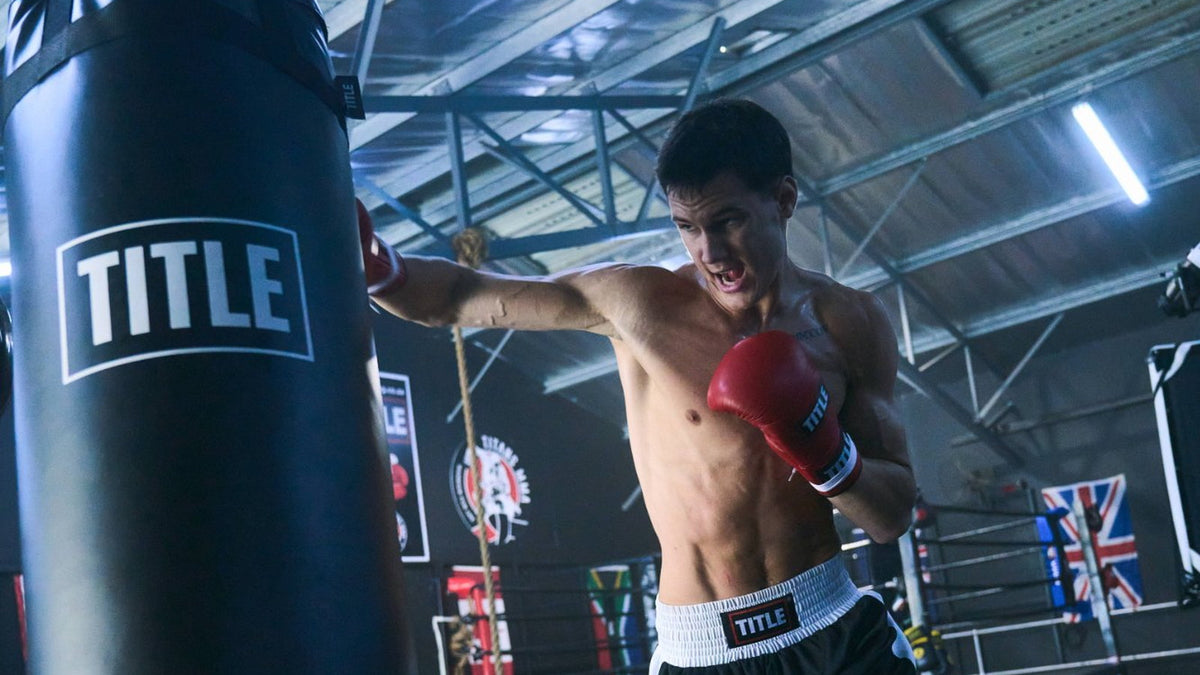
How to Develop Punching Power on the Heavy Bag
Punching power starts at the floor. Your feet push, your hips turn, your shoulder follows and your fist arrives last. The heavy bag is where you train that chain until it fires without thinking. Most people use the bag for cardio and wonder why their right hand still lands light. This guide gives you six heavy bag drills that build power, the gloves to wear for them, and the setup that lets you hit hard in a South African gym or garage.
What punching power on the heavy bag really means
Power is mass moving fast and landing as one piece. A 2025 study of boxers, published in Applied Sciences, measured how much body mass each punch carried into the target. The researchers called it effective mass. It was the strongest predictor of punch force in the study, ahead of raw hand speed. Straight punches carried more than twice the effective mass of hooks. Training experience and body composition barely moved the number. Technique did. (Kacprzak et al., 2025)
That changes how you work the bag. Swinging faster helps less than landing heavier. You want your whole body behind the glove at the moment of contact, then a clean reset for the next shot.
Six heavy bag drills for punching power
Warm up for two rounds first. Then work each drill for three-minute rounds with a minute of rest.
1. Single-shot power rounds
Throw one punch. Reset your stance. Throw again. Pick one shot per round: jab, cross, lead hook or rear uppercut. Every rep gets full intent. Stop the round when your form drops. Ten sharp crosses beat forty sloppy ones.
2. Sit down on the cross
Bend your knees a few centimetres as the rear hand lands. Drive off the back foot and turn the hip through. You should feel the bag fold, not swing. If the bag swings away, you pushed it. If it folds and thuds, you hit through it.
3. Jab to cross, then step out
Double up the jab, land the cross, then pivot or step off the line. Power punches mean nothing if you stand in front of the return shot. This drill teaches you to load up and leave.
4. Hook from the hips
Keep the lead elbow at shoulder height and the fist in line with the forearm. Turn the lead foot and hip together. The arm stays a frame, and the hips throw the punch. Short hooks at close range teach you to load the hip without winding up.
5. Power burst intervals
Work 20 seconds of hard, fast straight punches, then 10 seconds of slow jabs. Repeat for the full round. Late in a fight, power comes from the shots you can still land hard when your shoulders burn.
6. Freeze at impact
Throw the cross and hold your position for a count of one at contact. Check it. Is your rear heel up? Is your chin behind the shoulder? Is your wrist straight? Fix one thing and throw again. The freeze shows you where the chain leaks.
Heavy bag gloves: what to wear for power work
Power rounds put more load through your hands than any other bag work. Wrap your hands first, every session. TITLE Boxing Hand Wraps come in 3m and 4.5m lengths. The 4.5m length gives you more turns across the knuckles and wrist, which suits hard bag work for adult hands.
Then choose heavy bag gloves with firm, dense padding and a strap that locks the wrist. Softer sparring gloves feel kind on the knuckles but spread impact away from the target. For bag work you want a glove that holds its shape round after round. Browse the bag gloves collection and choose by hand size and session length, not only by ounce weight.
Keep one pair for the bag if you can. Bag work breaks down padding faster than pad work or sparring does.
Choosing the right punching bag for power training
A light bag swings away from a hard punch, and you end up chasing it. For power work you want a bag heavy enough to hold its line so you can plant your feet and stay in range.
The TITLE Titans Heavy Bags are built for exactly this. They come in three sizes, from the 1.2m Monolith at 80kg up to the 1.8m Goliath at 120kg, all 60cm across. That width gives you room for hooks and uppercuts without clipping the edge. For a wider choice of lengths and weights, look through the full range of heavy bags. TITLE makes its punching bags in South Africa.
Match the bag to your space and your weight:
- Home and garage: a 1.2m or 1.5m bag suits most rooms and ceilings.
- Heavier boxers and power punchers: go longer and heavier so the bag holds still.
- Gyms: long, heavy bags take more users per day and let coaches work the far side.
Hanging the heavy bag properly
A heavy bag needs a strong fixing point and space to move. Hang it so the top sits roughly at head height, with at least a metre of clear floor all round. Use a proper wall bracket or a ceiling beam rated for the full bag weight plus the force of hard punches. A swivel lets the bag turn without twisting the chain. You will find brackets, chains and swivels in the punching bag hangers and brackets collection.
If your walls are hollow or your roof beams are light, speak to a builder before you drill. A 100kg bag moving under a hard right hand puts real load on whatever holds it up.
Common mistakes that cost you power
- Pushing the bag. You hold contact too long. Snap the punch back to your guard.
- Loading with the arm. You pull the elbow back before you throw. Let the hips start it.
- Flat feet. Your rear heel stays down, so your hips can't turn. Come up on the ball of the foot.
- Chasing the swing. The bag is too light, or you keep hitting it off-centre. Hit through the middle.
- No rest between efforts. Power needs recovery. Keep the rest periods honest.
Build these drills into two or three bag sessions a week. Track the rounds and the quality, not only the sweat.
Ready to set up your power station? Find your bag in the TITLE heavy bags collection. Free shipping applies on orders over R1,999.
Frequently asked questions
How heavy should a heavy bag be for punching power?
Heavy enough that it barely moves after a normal cross. A bag that holds its position lets you plant your feet and throw hard. If it swings far after every shot, it is too light for power rounds, and you spend the round chasing it.
Can heavy bag training increase punching power?
Yes, when you train technique and intent together. Power comes from transferring body mass into the punch. Heavy bag drills that focus on footwork, hip rotation and clean contact train that transfer.
What size gloves should I use on a heavy bag?
Choose by hand size and padding, not only ounces. Many adults use 12oz to 16oz gloves for bag work. Firmer, denser padding suits heavy bag gloves better than soft sparring padding.
How often should I train on the heavy bag?
Two or three focused bag sessions a week works for most boxers alongside pad work and sparring. Keep power rounds short and sharp, and give yourself rest between hard days.
Where can I buy punching bags in South Africa?
TITLE makes and sells punching bags and heavy bags in South Africa through boxing.co.za, with free shipping on orders over R1,999.
Heavy bag approved. Ring ready.

